














 en
en
Your cart
There are no more items in your cart
€419.90

At VALK we've spent years designing and building gaming chairs, and that's given us a deep understanding of materials, their strengths and their limits too. One of the most common issues is PU leather upholstery deteriorating when it isn't cared for properly. The good news is that it's preventable with a few basic habits. In this guide we'll walk you through how, realistically and without overcomplicating things.
Polyurethane (PU) leather is used on a lot of gaming chairs for its sleek look, pleasant feel and easy cleaning. But like any technical material, it needs a bit of care if you want it to hold up well over time.
One of its main enemies is excess humidity. In poorly insulated rooms, coastal areas or spaces with little airflow, the upholstery can absorb moisture bit by bit. When that happens, it's more likely to lose flexibility, dry out, or even start showing surface cracks with continued use.
To give you a concrete reference: a PU chair with no care usually starts showing its first cracks from the third year onward. A well cared for one holds up fine for five years or more. The difference isn't the material, it's the routine.
Cracking almost never has a single cause. It's four factors adding up:
One thing that doesn't always get mentioned: what's underneath matters as much as the upholstery itself. Foam that sags makes the PU flex at the same fold every time, and that fold is where the crack shows up. Our chairs use 55 kg/m³ cold cured foam specifically so the seat doesn't deform after six months.
The key is a handful of small habits that add up to a real difference. You don't need to clean the chair every week, but it's worth building in a routine every few months.
One of the best investments here is a dehumidifier. It doesn't need to run constantly, but using it now and then on especially humid days helps keep excess ambient moisture in check, especially in rooms with no direct sunlight or poor air circulation.
Where you place the chair matters too. Avoid leaving it right against a radiator or under a window in direct sun for hours. If your setup is in a south facing room, lowering the blinds when you're not sitting there costs nothing and works.
You can also consider a protective cover if the chair is going to sit unused for several days, or if you have pets at home. Just make sure it's breathable. Fully plastic covers can make things worse if moisture gets trapped inside.
A clean every two to three months is enough for normal use. If you sweat a lot or spend long hours sitting, bump that up to once a month.
There's no need to obsess over daily cleaning, but every so often wipe it down with a damp microfiber cloth and a bit of mild soap (never abrasive or all purpose cleaners). Rinse with another lightly dampened cloth and dry with a dry one. The key is not soaking the surface, and especially not leaving moisture sitting in microperforated areas if your chair has that kind of finish.
With microperforated finishes you need to be a bit more careful, not because they crack sooner (they actually breathe better), but because soap and water get trapped inside the perforations if you press too much. Barely damp cloth, gentle motions.
After cleaning, the best move is to leave the chair in a ventilated spot until it's completely dry. No rushing it, no hair dryers, no direct heat sources.
If you also want to go over the wheels, mechanism and hardware, we cover that in the gaming chair cleaning and maintenance guide.
Just like with car seats, there are conditioning products made specifically for PU. These are formulas that hydrate the surface and help keep the top layer's elasticity. It's not mandatory, but applying it once or twice a year can be a good way to keep the chair looking newer for longer.
Pick one made specifically for synthetic leather or vinyl, with no silicones or solvents. Glossy silicone based finishes look great on day one and dry out the material over the medium term.
Most important: avoid direct water (for example, don't clean with soaking wet rags) and don't use heat sources to speed up drying. That hardens the surface and makes cracks more likely with daily use.
If you live somewhere humid or hot and spend long hours sitting, fabric and mesh will give you less work than PU leather. PU leather wins on quick cleanup (a spill wipes off with a cloth) and on feel, but it's the one that asks for the most upkeep over the long run.
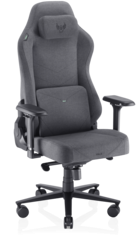
Our gaming chairs are available in breathable fabric and PU leather, and the choice isn't just about looks. If you want to dig deeper, we cover it in mesh or fabric for remote work and gaming.
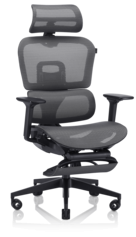
And if heat is more of an issue for you than humidity, mesh is the material that handles it best. You can check them out in ergonomic chairs.
With this minimal plan, your PU leather chair will stay in good shape for years, no cracks, no unpleasant surprises. It's common sense in practice, from the people who actually build these chairs.
With a microfiber cloth lightly dampened with water and a few drops of mild soap, rinsing with another clean cloth and drying with a dry one. No alcohol, disinfecting wipes or all purpose cleaners.
A clean every two to three months is enough for normal use. Go gently over the seams, where dust builds up, and let it air dry in a ventilated spot.
Through hydrolysis: moisture gradually breaks down the polyurethane layer. Heat, sweat and friction speed the process up.
That's why the first marks tend to show up on the seat edge and the backrest contact area, since that's where all four factors overlap.
With no care, the first cracks usually show up from the third year onward. With basic maintenance, it's normal for it to hold up well for five years or more.
What separates those two outcomes isn't the chair's price or brand, it's the routine: humidity between 40% and 60%, cleaning every two to three months and conditioner once or twice a year. That's what we've seen after years of building PU chairs and supporting the people using them every day.
No. Once the surface layer has cracked, it doesn't go back to its original state.
Conditioner and covers can slow it from getting worse and disguise the look, but the upholstery isn't a part you can just swap out. If the damage is extensive, the sensible move is switching chairs and going for fabric or mesh, which give you a lot less trouble in humid environments.
Under heavy use, and especially in hot or humid environments, fabric and mesh hold up better than PU leather. PU leather wins on quick cleanup and feel.
Fabric is the most balanced option for long sessions, mesh handles heat the best, and PU leather is the most forgiving with spills and the best fit for the classic racing look.
Between 40% and 60% relative humidity. Sustained levels above 60% degrade PU faster.
As for temperature, the problem isn't the general room temperature but direct heat: sun hitting the backrest for hours, or a radiator just a few centimeters away. That dries out the surface and makes it brittle.
Yes, as long as it's made specifically for synthetic leather or vinyl and has no silicones or solvents. One or two applications a year is enough.
Apply it to a clean, dry chair with a microfiber cloth, and wipe off the excess. Products that leave a lot of shine tend to be the ones that age the material worst.
Not because of the microperforation. It actually breathes better and builds up less heat and sweat, two of the factors that degrade the material.
The only extra care needed is not leaving water or soap trapped inside the perforations while cleaning. Barely damp cloth and air drying.
A check every six months is more than enough: upholstery, hardware, wheels and mechanism.
If something's making noise or feels loose, it's almost always a screw or a wheel, and the parts are available in spare parts. We cover it in the cleaning and maintenance guide.
If you're interested in keeping your gaming chair in top condition for years, check out these guides:
And if you have any questions or need help caring for your chair, reach out through our VALK Help Center. We'll be happy to help.