














 en
en
Your cart
There are no more items in your cart
€419.90

If you spend a lot of hours in your chair, sooner or later the question comes up: mesh or fabric. Both breathe better than PU leather. Both work for working and for gaming. But they're not the same chair for the same person.
Here's what changes between the two, and who each one suits best.
Mesh is a taut fabric stretched over a frame. That means two things: it ventilates a lot and it holds you firmly.
Worth knowing: in winter, the first few minutes can feel a bit cool. That passes quickly.
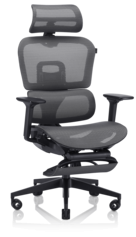
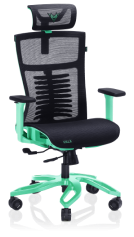
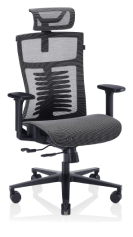
In the VALK lineup, the most complete mesh option is the VALK MYLA, with Flextex mesh, a PRO synchro mechanism and full adjustability. For more of a gaming character, there's the VALK Noma.
Fabric covers the seat and backrest with a continuous surface. The result is a chair that's softer to sit on and a bit warmer, without heating up the way PU leather does.
If you want to get into the care side, we cover it in cleaning and maintenance for your gaming chair.
If that sounds like you, the pick is the VALK MYLA.
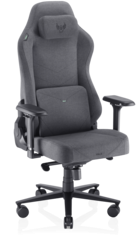
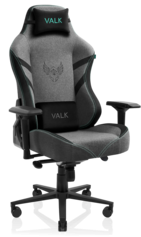
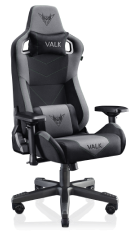
In fabric, VALK's most complete option is the VALK Freya Elite: magnetic neck cushion, lumbar support, high density foam and adjustments built for long back to back hours.
In the same line but more affordable: VALK Freya fabric and VALK Gaia fabric, both with 55 kg/m³ cold cured foam.
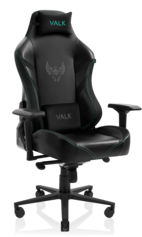
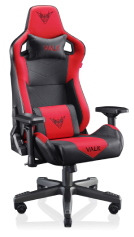
PU leather looks good, photographs well and cleans up easily. The problem shows up over the hours and the years: it retains more heat than fabric, and quite a bit more than mesh, and if the chair sits somewhere dry or in direct sun, it can end up cracking.
If PU leather appeals to you, take a look first at how to avoid cracking in PU leather.
The material matters, but it's not the only thing deciding comfort. A comfortable chair also depends on:
To get the size right: how to choose a chair based on your height and weight.
If you already have the chair but aren't getting the most out of it: how to sit correctly.
If you're hot where you work, or want a chair that looks like office furniture, go mesh. If you want something softer to sit on and a balance between work and gaming, go fabric.
Both breathe better than PU leather. Both last. What changes is how and where you use it.
If you're unsure about your case, reach out through the VALK Help Center and we'll point you in the right direction.
Mesh, no comparison. It's a fabric stretched taut over a frame that lets air pass straight through, while fabric covers the seat with a continuous layer that breathes well but not at the same level.
If heat is your main issue, mesh. If you want a balance between breathability and a softer feel, fabric.
No, it's a different mechanism. Mesh doesn't rely on foam compacting, it holds you through the tension of the fabric itself across the frame, so it doesn't sag over the months the way low density foam would.
What's worth checking is the quality of that mesh: a well made one keeps its firmness for years, a cheap one starts to give out before its time.
Both work well for long days, the difference comes down to your environment. If you get hot in your office or work far more hours than you game, mesh will give you less work. If you split time between working and gaming and prefer a softer feel, fabric fits better.
At VALK, the MYLA is the mesh chair built specifically for that, and the Freya Elite is the fabric option with the most adjustability for long sessions.
No. Cracking is a problem specific to PU leather, not fabric. Fabric doesn't split from sun or dry conditions, and with minimal care it keeps its look for years.
If you're curious why it does happen to PU leather, we explain it in how to avoid cracking in PU leather.
Well cared for, all three last for years, but not in the same way. Mesh doesn't rely on foam, so it doesn't lose firmness over time. Fabric holds up well with minimal maintenance. PU leather needs the most care, since it can crack if you don't manage humidity and heat.
If you want the lowest maintenance possible long term, mesh first, fabric second.